

Quick answer
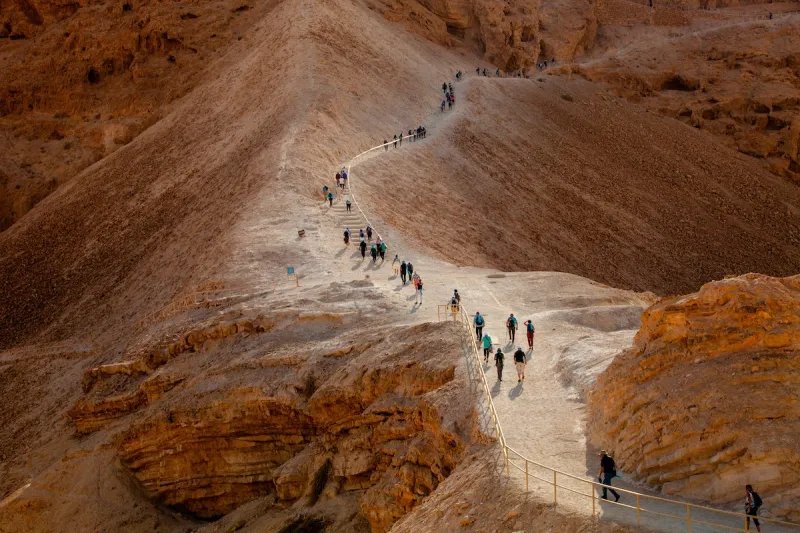
How long does it take to climb Masada? The Snake Path ascent takes 45 to 60 minutes for most visitors, while the Roman Ramp route on the western face requires 20 to 30 minutes. Both figures assume a moderate pace with brief stops. Summer heat can slow progress significantly, and early-morning starts between 08:00 and 10:00 yield the most comfortable conditions before midday temperatures exceed 35°C.
The Snake Path rises 350 meters through 900 steps carved into Masada's eastern cliff, its name earned from the switchbacks that zigzag like a serpent up the rock face. This route follows the original access path used by Herod's engineers and later by the Jewish rebels during the Roman siege. The climb is relentless but graded, with no technical scrambling required. Your ascent time hinges on three variables: route selection, physical conditioning, and thermal load. The Snake Path demands cardiovascular endurance and leg strength, while the shorter Roman Ramp trades distance for steeper gradients. In summer months from June through September, surface temperatures on the exposed trail can reach 45°C by noon, extending climb times by 20 to 30 percent as dehydration and heat fatigue set in. Winter and spring climbs proceed faster, though strong winds occasionally force slower pacing. Most climbers begin at the eastern parking area near the Dead Sea, where the Snake Path trailhead sits at minus 60 meters below sea level. The path offers no shade and limited rest platforms, so water reserves and sun protection are not optional. The Roman Ramp approach requires driving to the western entrance, a route less traveled but equally exposed. Both paths converge at the plateau, where the palace ruins, bathhouse complex, and northern observation point await exploration. The fortress summit spans 23 acres, and a thorough walk-through of Herod's palace terraces, the synagogue ruins, and the casemate wall circuit adds 90 to 120 minutes beyond the ascent. Many visitors underestimate this exploration time and rush the descent, missing the storeroom mosaics and the western palace's frescoes. The Masada ascent is a transit, not the destination—the ruins themselves hold the historical weight that justifies the climb.
“The Snake Path rises 350 meters through 900 steps, its switchbacks carved into the eastern cliff like a serpent ascending the rock face.”
How Long Does It Take to Climb Masada: A Realistic Visit Plan
This plan suits visitors taking the Snake Path ascent and spending roughly two hours exploring the summit plateau. Budget four to five hours total from arrival to departure.
Arrive and Start Snake Path
Park near the east entrance and begin the Snake Path climb. The 900-step ascent takes 40–60 minutes depending on fitness and rest breaks.
Reach the Summit Plateau
Exit the trail at the top and take ten minutes to hydrate and catch your breath before exploring. The summit spans roughly 23 acres with multiple palace and fortress zones.
Explore Herod's Palaces and Storerooms
Walk through the Northern Palace terraces, Western Palace mosaics, and Roman-style bathhouse. Allow 60–90 minutes to cover the main archaeological zones without rushing.
Visit the Synagogue and Cisterns
Head to the Byzantine-era synagogue and examine the water cistern system. Budget 20–30 minutes for these structures and any remaining fortification walls.
Descend via Cable Car or Snake Path
Take the cable car down (eight minutes) or retrace the Snake Path (30–40 minutes downhill). Factor in queue time for the cable car during peak morning hours.
Snake Path vs. Cable Car: Choosing How Long It Takes to Climb Masada
Visitors to Masada choose between a physical ascent via the historic Snake Path or a rapid transit via the cable car. Your choice determines both the duration of your arrival and your overall exertion levels.
| Snake Path On Foot |
Top pick Cable Car Mechanized |
|
|---|---|---|
| Method | Hike (900 steps) | Aerial Cable Car |
| Time Required | 45–60 minutes | 3 minutes |
| Physical Effort | High | Minimal |
| Visibility/Exposure | Full desert exposure | Enclosed cabin |
Verdict: Hikers seeking the full historical experience should choose the Snake Path, while those prioritizing efficiency or physical comfort should utilize the cable car.
Determining the Best Time for How Long It Takes to Climb Masada
The best arrival window is 08:00–10:00 to avoid mid-day desert heat and peak crowds. Planning your ascent during this time ensures a more comfortable experience as you navigate the 900 steps.
Winter (Nov–Feb)
ModerateCooler temperatures (15°C–20°C)
This period offers the most manageable conditions for hiking the path. Daytime heat is significantly lower, making the ascent physically easier.
Spring/Autumn (Mar–May, Sep–Oct)
HighWarm to hot (25°C–32°C)
Expect increasing temperatures that necessitate an early start. Arriving at 08:00 is essential to complete the climb before the heat intensifies.
Summer (Jun–Aug)
Very HighExtreme desert heat (35°C+)
Climbing is difficult and often restricted due to safety concerns. Visitors should prioritize the earliest possible start if attempting the hike.
Verdict: The best slot is Tuesday to Thursday, arriving at 08:00, during the months of March, April, October, or November.
Operating Hours Affecting How Long It Takes to Climb Masada
Masada National Park operates daily, though your climbing time must align with the site's closing schedule to ensure a complete visit.
| Monday | 08:00–17:00 | |
|---|---|---|
| Tuesday | 08:00–17:00 | |
| Wednesday | 08:00–17:00 | |
| Thursday | 08:00–17:00 | |
| Friday | 08:00–15:00 | |
| Saturday | 08:00–17:00 | |
| Sunday | 08:00–17:00 |
Entrance Fees and Costs Related to How Long It Takes to Climb Masada
Access to Masada National Park requires a conservation fee. This mandatory admission cost remains constant regardless of whether you choose to hike the 900 steps or use the cable car system.
A typical adult pays 37 ILS for site admission, which remains the same regardless of your chosen ascent method.
Checklist for Those Wondering How Long It Takes to Climb Masada
The 900-step Snake Path ascent demands preparation—pack smart and start early to avoid desert heat.
-
Bring 2+ liters of water per person — The exposed climb in desert heat causes rapid dehydration, especially during warmer months.
-
Wear sturdy closed-toe shoes with grip — Ancient stone steps can be uneven and slippery, requiring ankle support and traction.
-
Apply sunscreen and wear a hat — No shade exists on the Snake Path; UV exposure is intense year-round.
-
Start your climb by 08:00 — Temperatures rise sharply after 10:00, making the ascent significantly more strenuous.
-
Pack light snacks and electrolytes — The 40–60 minute climb depletes energy; quick fuel helps maintain stamina.
-
Check your fitness level beforehand — 900 steps with elevation gain challenge even regular hikers; train if needed.
Check availability
Common Questions About How Long It Takes to Climb Masada
Everything you need to know about how long does it take to climb masada